Choosing the right construction materials is one of the most important decisions when building a home in Bangalore. With rising property costs, unpredictable weather patterns, and increasing demand for sustainable living, homeowners are now more informed and quality-focused than ever. Before starting construction, the first question many people ask is: “What are the best building materials for construction in Bangalore?”
Bangalore’s climate marked by heavy monsoons and strong summer heat demands materials that withstand moisture, temperature changes, and long-term structural stress. Poor-quality bricks, untested steel, or low-grade concrete can lead to cracks, dampness, and compromised load-bearing strength over time. With rising construction costs, homeowners must also ensure they are not overpaying for high-end materials when better-performing, cost-efficient options exist.
Proptech companies like SPC Services bring transparency into this process by tracking supplier quality, verifying certifications, and ensuring each material batch meets BBMP and BDA compliance standards.
If you're wondering “Which bricks should I use for my home in Bangalore?”, here’s the clear answer:
AAC blocks are best for energy efficiency and speed; solid clay bricks are best for durability and long-term stability.
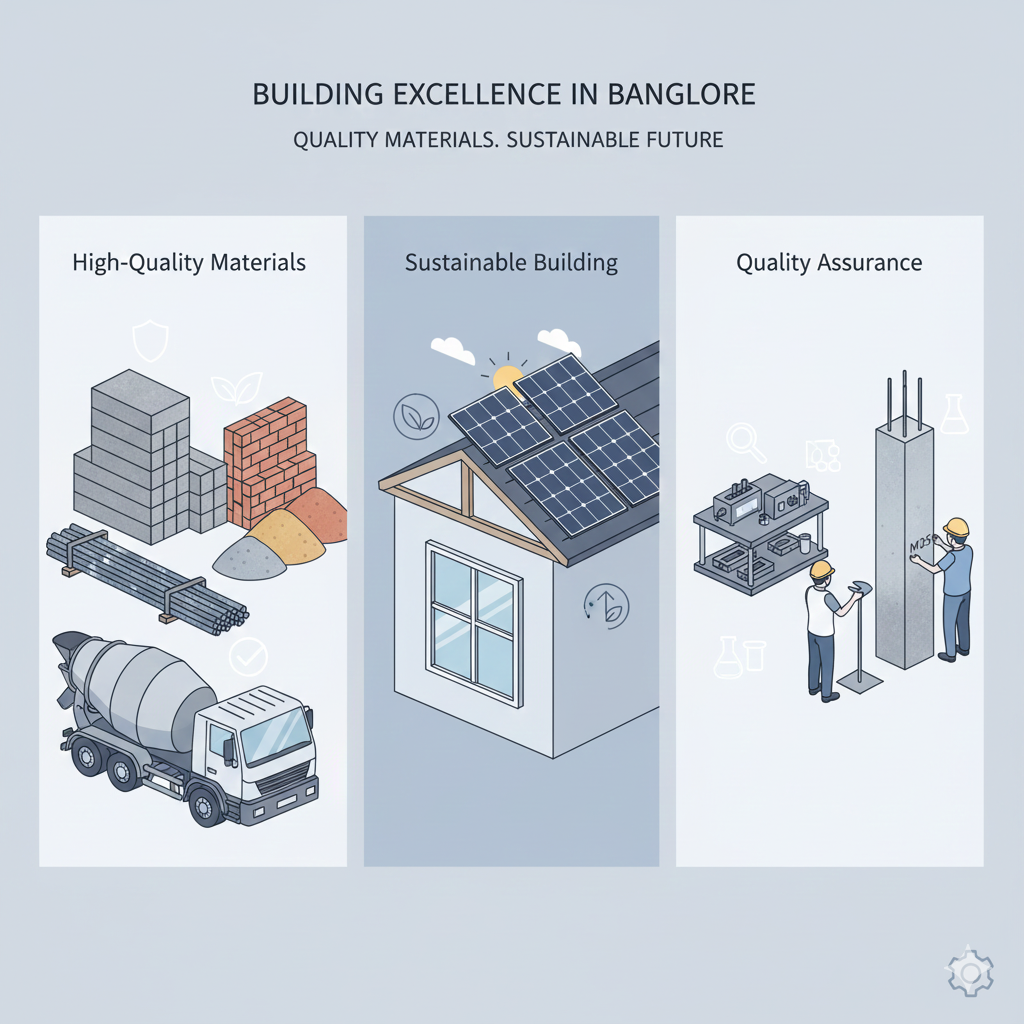
Clay bricks are ideal for load-bearing walls and long-term durability, especially in moisture-prone areas. AAC blocks (Autoclaved Aerated Concrete) are lightweight, reduce heat transfer, and speed up construction excellent for urban homes requiring thermal comfort and faster timelines.
For most residential homes in Bangalore, the recommended concrete grades are:
M20 for foundations and slabs, M25 for structural elements like beams and columns.
These grades balance strength and cost-efficiency while complying with IS code standards used widely across Bengaluru construction projects.
(Optimized for answer engines and readability)
| Material Type | Durability | Cost Efficiency | Eco-Friendliness | Ideal Use |
|---|---|---|---|---|
| Clay Bricks | High | Moderate | Medium | External walls, load-bearing walls |
| AAC Blocks | Medium | High | High | Urban homes, heat insulation, faster work |
| M-Sand | High | High | High | Plastering, concreting (BBMP-approved) |
| Fe500/Fe550 TMT Steel | Very High | Moderate | Medium | Beams, columns, earthquake resistance |
| Ready-Mix Concrete (RMC) | Very High | High | High | Foundations, slabs, large pours |
| UPVC Windows | High | High | High | Energy efficiency, noise reduction |
| Solar Tiles & Panels | High | Low–Medium ROI | Very High | Sustainable, long-term cost saving |
Material selection should not feel overwhelming. Here’s a simple flow homeowners in Bangalore can follow:
Start by deciding your construction priority cost control, long-term durability, or sustainability. If durability is your target, clay bricks, Fe550 steel, and M25 concrete should be your foundation. For eco-friendly living in Bangalore’s warm climate, AAC blocks, UPVC windows, and solar panels create an energy-efficient home with lower utility bills. Material testing is crucial in the city’s unpredictable climate; ensure your steel is TMT-certified, concrete is lab-checked, and M-Sand is sourced from BBMP-approved suppliers. Once materials are shortlisted, compare vendors not just by cost but by certification, consistency, and delivery reliability. Proptech platforms like SPC Services streamline this by giving homeowners visibility into supplier ratings, quality reports, and material performance history.
Sustainability is no longer an optional trend it’s becoming a standard for new residential construction across Bangalore. Materials like AAC blocks, low-VOC paints, bamboo flooring, UPVC windows, and rainwater harvesting tiles are growing in demand. With rising temperatures and shrinking green cover, eco-friendly construction materials reduce heat absorption, improve ventilation, and lower energy bills while increasing the long-term value of your property.
BBMP, BDA, and IS (Indian Standards) guidelines require strict material testing and adherence to structural safety norms. This includes ensuring TMT steel follows IS 1786, cement meets IS 1489 or IS 8112, and ready-mix concrete follows IS 4926. Failure to comply can lead to penalties, rejection of approvals, or long-term safety risks. A certified construction partner helps manage this entire compliance cycle so homeowners do not face quality surprises or legal delays.
Clay bricks, AAC blocks, M-Sand, RMC, Fe500/Fe550 steel, and UPVC windows are recommended for modern residential construction.
AAC blocks are superior for insulation and fast construction, while clay bricks offer better durability and moisture resistance.
Use M20 for slabs and foundations and M25 for beams, columns, and heavy load-bearing structures.
Yes. M-Sand is BBMP-approved, cost-efficient, and environmentally sustainable. It also offers better uniformity.
AAC blocks, solar panels, UPVC windows, fly-ash bricks, and low-VOC paints are excellent sustainable choices.
Through supplier verification, certification checks, lab testing, and digital tracking of each material batch from delivery to installation.
Material selection is more than a technical choice it’s a long-term investment in quality, sustainability, and safety. By understanding the strengths, limitations, and costs of each material, Bangalore homeowners can make informed decisions that protect their home for decades. With the right partner supported by transparent sourcing and proptech tools your home construction journey becomes smoother, safer, and more cost-efficient.


Share This News